Comparison
Phlebotomist vs Medical Assistant
Phlebotomist vs Medical Assistant: Which Should You Choose?
Phlebotomist vs medical assistant comes down to time and scope: phlebotomy training runs about 13 weeks at the median and focuses on drawing and labeling blood, while medical assistant programs usually take 1 to 2 years and cover vital signs, exams, injections and front-office work. Pay is nearly the same, with May 2025 medians of $45,230 for phlebotomists and $45,690 for medical assistants. A combined phlebotomy and EKG program sits in between.
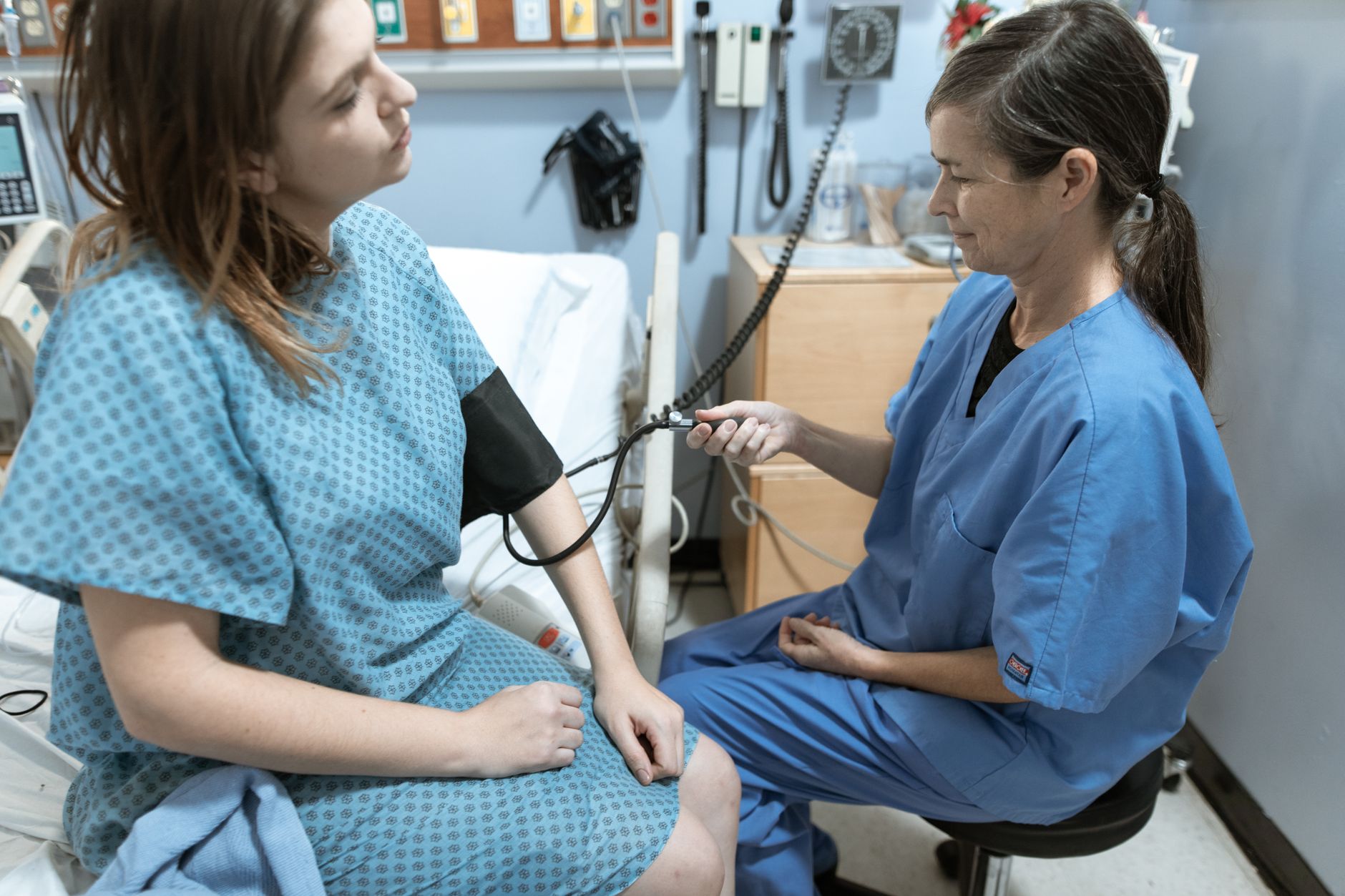
Phlebotomist vs Medical Assistant, Side by Side
Both jobs put you in scrubs within a year, both start with a certificate rather than a degree, and their May 2025 medians were nearly identical: $45,230 for phlebotomists and $45,690 for medical assistants. The difference is in how much you do and how long you train to do it.
| Phlebotomist | Medical assistant | |
|---|---|---|
| Main job | Drawing, labeling and tracking blood and other samples | Clinical and office support in a doctor’s office or clinic |
| Typical training | Certificate, usually less than 1 year; 13 weeks at the median across 696 programs on this site | Certificate, usually about 1 to 2 years |
| Hands-on requirement | Documented live draws; the NHA exam needs at least 30 venipunctures and 10 capillary sticks | Clinical skills across vital signs, exams, injections and specimen collection |
| Main certifications | NHA CPT, ASCP PBT, AMT RPT, NCCT NCPT | NHA CCMA, AMT RMA and others |
| Largest employers | Hospitals (36%) and medical and diagnostic labs (33%) | Offices of physicians (56%) |
| Median pay, May 2025 | $45,230 ($21.75 an hour) | $45,690 ($21.97 an hour) |
| Bottom 10 percent / top 10 percent | under $35,780 / over $58,780 | under $36,050 / over $59,310 |
| Jobs in 2025 | about 143,900 | about 833,900 |
| Projected openings a year, 2025 to 2035 | about 18,000 | about 109,700 |
Sources: BLS Occupational Outlook Handbook and OEWS, May 2025.
How the Daily Work Differs
A phlebotomist’s day is built around one task done many times. BLS lists the duties: draw blood from patients or donors, verify each person’s identity, calm nervous patients, label every tube for testing, label containers for other samples such as urine, enter sample information into a database, and keep needles, tubes and the work area in order. Accuracy on each draw and each label is the job.
A medical assistant’s day is broader. BLS lists interviewing patients and recording their history, measuring vital signs such as blood pressure and weight, helping physicians with exams, giving injections or medications where state law allows, scheduling appointments, entering information into medical records and keeping supplies stocked. Collecting and preparing blood and other specimens is on the list too, and BLS notes that some assistants draw blood.
So a medical assistant may do some of a phlebotomist’s work, but a phlebotomist doesn’t do a medical assistant’s. If you like variety and talking with patients through a whole visit, medical assisting fits. If you prefer a defined skill, quick patient contacts and lab-facing work, phlebotomy fits.
Training Length and Cost Compared
Phlebotomy is the faster route. Across 696 programs on this site, the median length is 13 weeks, and non-credit workforce courses run 10 weeks at the median. Some are shorter: Los Angeles Career College runs two weeks of training plus a 40-hour externship, and Tennessee College of Applied Technology-Knoxville runs evening sections of about two weeks.
Supervised practice is built into most phlebotomy programs: 486 of the 696 on this site include clinical hours, and among those that state a figure the median is 100 hours. A program without a clinical placement, such as a lab-only course, leaves you to document live draws another way before an exam or employer will accept you.
Medical assistant programs usually take about 1 or 2 years, according to BLS, and include courses such as medical terminology, anatomy and pharmacology.
Cost follows length. The median published price among 272 phlebotomy programs on this site was $1,400. Programs that train you as a medical assistant with phlebotomy cost far more. Campus (formerly MTI College) in Sacramento lists $11,780 for its Medical Assistant with Phlebotomy certificate, which takes as few as 72 weeks. Downey Adult School lists $5,999, books included, for a 700-hour Medical Assistant Specialist course that adds the California CPT I phlebotomy license.
Certification: Phlebotomy vs Medical Assistant
In both fields, certification is something employers may prefer or require more than something the law demands. BLS says most states do not require medical assistants to be certified. For phlebotomists, BLS notes that some employers prefer certified candidates, and a few states set their own rules, covered in the phlebotomy license requirements by state guide.
Phlebotomy License vs Certification
A license is issued by a state and is required to work there. A certification comes from a national body after you pass its exam. California, for example, issues the Certified Phlebotomy Technician I (CPT I) through its Department of Public Health, and California programs prepare you for both a national exam and that state certificate. Elsewhere, the national credentials are the NHA CPT, ASCP PBT, AMT RPT and NCCT NCPT.
Medical Assistant Phlebotomist Certification
There’s no single credential that covers both jobs. The route is two credentials, or a medical assistant credential that includes blood draws. NHA’s Certified Clinical Medical Assistant (CCMA) lists phlebotomy among its tasks. To sit for it, you need a medical assistant program finished in the last 5 years or 1 to 2 years of supervised medical assisting work. Phlebotomy-only training doesn’t qualify.
Some schools let you choose. Vanguard-Sentinel Adult Career and Technology Center in Fremont, Ohio, runs a 900-hour Diversified Medical Occupations program with a 320-hour externship that leads to AMT Registered Phlebotomy Technician or Registered Medical Assistant, depending on the specialty you pick.
Phlebotomy and EKG Programs: A Middle Route
These programs train you in both blood draws and EKGs, two of the clinical skills medical assistants also use.
- Alaska Career College certificateAnchorage, AK · 7 months (weekend class schedule)
- Arkansas College of Health Careers courseLittle Rock, AR · Ten weeks
- Institute for Business and Technology diplomaSan Jose, CA · As few as 9 months (about five hours a day, Monday through Thursday) · externship: 160 hours
- National Career Education diplomaCitrus Heights, CA · As few as 9 months (36 weeks: seven 4-week modules plus about 8-week externship) · externship: 160 hours
- Infinity College diplomaLafayette, LA · 25 weeks; Monday through Thursday 8:30am to 2:30pm · externship: included
- Cape Cod Community College certificateWest Barnstable, MA · externship: included
- Massasoit Community College courseBrockton, MA · One semester (11 weeks of class, then practicum) · externship: 120 hours
- Northern Essex Community College certificateHaverhill, MA · As little as 10 months · externship: included
- Las Vegas College diplomaLas Vegas, NV · As few as 9 months (36 weeks) · externship: included
- American Institute of Medical Sciences & Education certificatePiscataway, NJ · 2 months (weekend schedule 6 months)
- SUNY Erie certificateBuffalo, NY · externship: 45 hours
- SUNY Westchester Community College courseValhalla, NY · Sept.-Dec; (Ossining Sa/Su 9:00 am-3:00 pm; Mount Vernon F/Sat 9:00 am-3:00 pm or M/W 6:00-9:30 pm) · $2,200
Where Each One Works and What It Pays
Phlebotomists work mostly in hospitals and labs, and BLS notes that those settings may need nights, weekends and holidays. Medical assistants work mostly in doctors’ offices.
| Workplace | Phlebotomist median, May 2025 | Medical assistant median, May 2025 |
|---|---|---|
| Outpatient care centers | $48,030 | $48,560 |
| Hospitals (state, local and private) | $44,220 | $46,910 |
| Offices of physicians | $44,500 | $45,520 |
| Medical and diagnostic laboratories | $46,670 | |
| Offices of other health practitioners | $38,400 |
Source: BLS Occupational Outlook Handbook. A blank cell means the industry isn’t among that occupation’s top employers.
Pay is close enough that it shouldn’t decide for you. The bigger difference is the job market: BLS counted about 833,900 medical assistant jobs in 2025, against about 143,900 for phlebotomists, and projects growth of 13 percent for medical assistants and 7 percent for phlebotomists from 2025 to 2035. The phlebotomist salary guide shows phlebotomy pay in every state.
Phlebotomy Plus EKG: The Middle Route
If you want more than phlebotomy without committing to a full medical assistant program, a combined phlebotomy and EKG program adds a second clinical skill. Fifteen programs on this site combine the two. A sample:
| Program | Credential | Length | Published cost or format |
|---|---|---|---|
| SUNY Westchester Community College, Valhalla, NY | Non-credit course | Day, evening and weekend sections | $2,200 |
| Madison Adult Career Center, Mansfield, OH | Non-credit course | 244 hours with a required externship | $2,990 program total, including certification fees |
| Massasoit Community College, Brockton, MA | Non-credit dual certificate | 260 contact hours over 11 weeks plus a 120-hour practicum | Free for unemployed or underemployed applicants who meet eligibility requirements |
| American Institute of Medical Sciences & Education, Piscataway, NJ | Certificate | 7 credit hours over 9 weeks | Hybrid; day, evening and weekend |
| Cape Cod Community College, West Barnstable, MA | Credit certificate | 16 credits | Includes a phlebotomy practicum |
| Institute for Business and Technology, San Jose, CA | Diploma | 720 clock hours, as few as 9 months | 160-hour externship; school pays the first NCCT exam attempts |
These programs are longer than phlebotomy alone but shorter than most medical assistant programs. The phlebotomy and EKG programs ranking lists all fifteen.
Phlebotomy Training for Medical Assistants
If you’re already a medical assistant, a phlebotomy course can sharpen the blood-draw part of your job and add a phlebotomy credential. Short courses are built for this. Hillsborough College in Tampa runs a hybrid non-credit course of over 90 hours, with 30 venipunctures and 10 capillary sticks completed in the lab, for $1,549 including one NHA CPT exam attempt. The Regional Center for Border Health in Somerton, Arizona, runs a 40-hour course for people who already have training or a year of experience.
The best phlebotomy courses ranking lists non-credit options by state.
Which Path Fits You
- You want to work fast and spend little. Choose phlebotomy. A non-credit course at a community college is the shortest route, and the best phlebotomy programs ranking scores every option on clinical hours, exam preparation and cost.
- You want the widest job market. Medical assisting had about 833,900 jobs in 2025 and about 109,700 projected openings a year, but the training takes longer.
- You want hospital or lab work. Phlebotomy points you there; most medical assistants work in physician offices.
- You want a daytime, office-hours schedule. Most medical assistants work in physician offices, while BLS notes that hospital and lab phlebotomy jobs may include nights, weekends and holidays.
- You’re not sure yet. Start with phlebotomy or phlebotomy plus EKG. It’s a short commitment, and if you later move into medical assisting, you’ll arrive already able to do the blood draws on that job’s duty list.
For the full route into phlebotomy, read how to become a phlebotomist, or see what a phlebotomist does day to day.
Frequently Asked Questions
Can a Medical Assistant Draw Blood?
Often, yes. BLS lists collecting and preparing samples of blood and other specimens among medical assistant duties and says some assistants draw blood. NHA lists phlebotomy among the tasks of a Certified Clinical Medical Assistant (CCMA).
Is Phlebotomy Harder Than Medical Assisting?
Phlebotomy is narrower, not easier. You master one skill to a high standard: the NHA phlebotomy exam requires at least 30 venipunctures and 10 capillary sticks on live people. Medical assisting asks for a wider range of clinical and office skills over a longer program.
Which Job Has More Openings?
Medical assisting, by far. BLS projects about 109,700 openings a year for medical assistants from 2025 to 2035, against about 18,000 for phlebotomists.
Can You Go From Phlebotomist to Medical Assistant?
Yes. NHA's CCMA exam is open to people who finished a medical assistant program in the last 5 years or have 1 year of supervised medical assisting work in the last 3 years (or 2 years in the last 5). Phlebotomy experience alone doesn't qualify you, so plan on a medical assistant program.
Is a Medical Assistant Certification Required?
BLS says most states do not require it, but employers may prefer or require certified medical assistants. The same is true of phlebotomy: some employers prefer certified phlebotomists. See the phlebotomy certification guide.
Which Pays More in Hospitals?
In May 2025, BLS put the hospital median at $46,910 for medical assistants and $44,220 for phlebotomists.
Keep Reading
- Phlebotomist SalaryWhat phlebotomists earn nationally and in every state (BLS OEWS), the spread from entry level to the top tenth, and where the job leads
- Mobile PhlebotomistWhat mobile phlebotomists do, the training and experience they need, and how the work differs from a hospital or lab job
- What a Phlebotomist DoesA phlebotomist's daily duties, where they work, the skills the job needs and how phlebotomy fits into healthcare careers
- How to Become a PhlebotomistThe training, supervised blood draws, certification exam and state rules that take you from no experience to your first phlebotomy job
- Phlebotomy CertificationThe national phlebotomy certifications, who can sit each exam, what the eligibility routes require and which programs prepare you for them
- How Long Training TakesHow many weeks, classroom hours and externship hours phlebotomy programs take, by credential, from programs checked on schools' own sites
- Best Phlebotomy ProgramsEvery program, scored and ranked
- Phlebotomy Programs by StateEvery state's schools, ranked
Sources
- BLS Occupational Outlook Handbook: Medical Assistants
- BLS Occupational Outlook Handbook: Phlebotomists
- BLS OEWS: Phlebotomists (31-9097), May 2025
- NHA: Certified Clinical Medical Assistant (CCMA)
- NHA: Certified Phlebotomy Technician (CPT)
- U.S. Bureau of Labor Statistics, Occupational Employment and Wage Statistics, May 2025: Phlebotomists (31-9097)