Program Length
How Long Is Phlebotomy Training?
How Long Is Phlebotomy Training?
How long is phlebotomy school? The median is 13 weeks across the 374 programs that state a length, with about 100 hours of instruction and 100 hours of externship among programs that give those figures. Weekend and two-week formats can finish classes in 2 weeks plus an externship, while two-semester certificates and lab assistant diplomas take two semesters or more. See the accelerated phlebotomy programs for the fastest options.
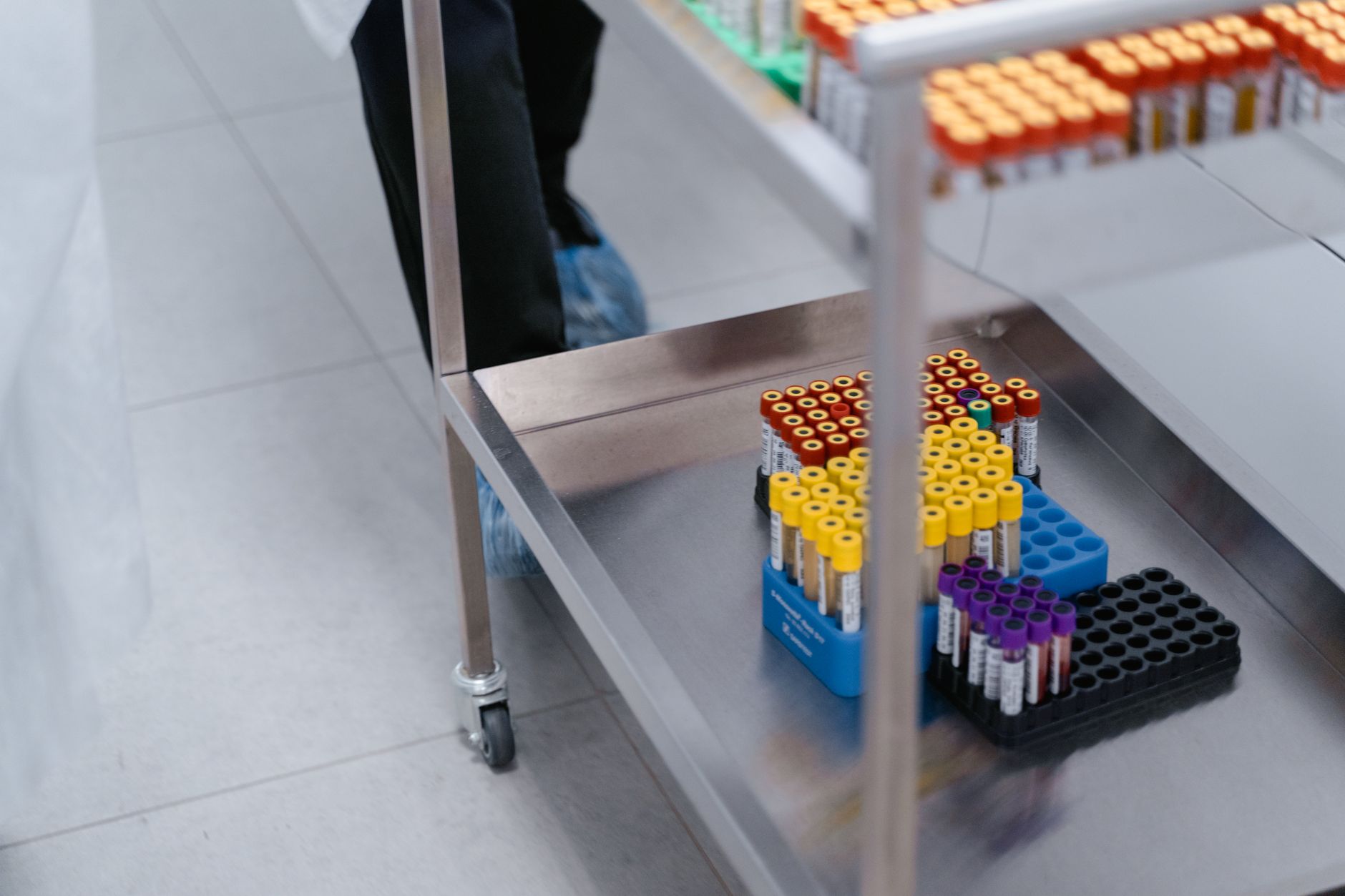
Phlebotomy training is one of the shortest routes into healthcare. The median stated length is 13 weeks, but the real answer depends on three things: the type of program, how many externship hours it requires, and whether you study days, evenings or weekends. The figures below come from 696 programs checked on school websites in November 2026.
How Long Is Phlebotomy School by Program Type
Among the 374 programs that state a length, the median is 13 weeks. The Bureau of Labor Statistics notes that phlebotomy programs usually take less than a year. Here is how the four program types compare, using the programs in each group that state the figure.
| Program type | Programs | Median length | Median instruction hours | Median externship hours |
|---|---|---|---|---|
| Non-credit course | 329 | 10 weeks | 90 | 60 |
| Diploma | 38 | 12 weeks | 128 | 160 |
| Credit certificate | 325 | 16 weeks | 165 | 100 |
| Associate degree | 4 | 80 weeks (one stating) |
Blank cells mean too few programs state the figure to give a median.
Non-credit courses are the fastest because they skip general education and fit into a community college’s continuing education calendar. Credit certificates usually follow the semester, so 16 weeks is common. Diplomas from career schools are compact but heavier on clinical time: Concorde Career Institute - Tampa fits 128 contact hours into 8 weeks. The associate degree is rare and adds general education; it suits someone who wants a lab career, not a quick start.
Classroom Hours and Externship Hours
Every program splits into two parts: classroom and lab instruction, then supervised draws on real patients. The median among programs that state each figure is 100 hours of instruction and 100 hours of externship. Of the 696 programs, 486 include clinical hours.
Some examples of how the split works:
| Program | Instruction | Externship | Stated length |
|---|---|---|---|
| Pima Medical Institute-Tucson | 70 class + 70 lab hours | 160 hours | About 3 months |
| Blinn College | 96 hours | 80 hours | |
| Fayetteville Technical Community College | 158 class/lab hours | 100 hours | |
| Kaiser Permanente School of Allied Health Sciences | Weeks 1-4, four days a week | 160 hours, weeks 5-8 full time | 9 weeks |
| Wake Technical Community College | 176 contact hours total | 50 hours in the last four weeks | 12 weeks |
The externship drives the total more than the classroom does. A 40-hour externship is one full-time week; a 160-hour one is four. Credentialing bodies also set a floor on instruction: AMT’s education route asks for at least 120 didactic clock hours (or the state-required amount), or NAACLS accreditation.
The Shortest Phlebotomy Programs
These are the shortest programs by stated length. Most finish classes in about two weeks, then add a separate externship.
- Blue Haven Career College in Los Angeles: a 2-week class (10 days) of 40 classroom hours, plus a 40-hour externship scheduled separately, for $995.
- Los Angeles Career College: 2 weeks of training (80 hours) plus a 40-hour externship.
- Pro Med Career Institute: three weekends of class, then a Monday-to-Friday externship of 1-2 weeks.
- Northeast Medical Institute in Stamford: 80 hours in 2 weeks as a day program or 4 weeks in the evening, with the NHA exam taken onsite, for $1,200.
- Tennessee College of Applied Technology-Knoxville: 49 hours in about two weeks per section, with live sticks practiced on classmates, for $371 plus $71 in books.
- Arkansas Tech University: about 3 weeks, Monday to Friday from 8:00 a.m. to 2:30 p.m.
Bakersfield College puts its clinical into one compact block: 40 hours of supervised training, typically 8 hours a day for 1 week, after a semester of classes that meet 4 hours a day, 3 days a week.
A short program isn’t automatically a lower-cost one. Blue Haven’s $995 is well below Los Angeles Career College’s $2,000 headline, and both run about the same length. The accelerated phlebotomy programs ranking lists 105 fast options.
Programs That Take Longer, and Why
Longer programs usually do more, not just go slower:
- Combined credentials. National Career Education takes as few as 9 months (36 weeks) for lab assistant, EKG and phlebotomy training, including a 160-hour externship. Vanguard-Sentinel Adult Career and Technology Center runs 900 hours, 320 of them in an externship. See phlebotomy and EKG programs.
- Two-semester certificates. Massachusetts Bay Community College and Lake Area Technical College each run two semesters, with 160- and 120-hour clinical placements.
- Heavy clinical time in a short window. Westmoreland County Community College fits a 224-hour practicum into the second 8 weeks of one semester.
- Medical assistant programs with phlebotomy. Campus (formerly MTI College) takes as few as 72 weeks. If you’re deciding between the two careers, read phlebotomist vs medical assistant.
Phlebotomy Program Length by Credential
| Credential | Stating a length | Median length | Median class hours | Median externship hours |
|---|---|---|---|---|
| Non-credit course | 175 | 10 wk | 90 | 60 |
| Certificate | 219 | 16 wk | 165 | 100 |
| Diploma | 21 | 12 wk | 128 | 160 |
| Associate degree | 1 | 80 wk |
How Long Phlebotomy Programs Run
| Stated length | Programs |
|---|---|
| 4 weeks or less | 33 |
| 5 to 8 weeks | 94 |
| 9 to 16 weeks | 201 |
| 17 to 32 weeks | 71 |
| More than 32 weeks | 17 |
What Adds Time to Phlebotomy Training
The published length is the classroom calendar. These are the gaps that stretch it:
Externship scheduling. Several programs place the externship after classes end. Pro Med’s externship must be finished within 120 days. Blue Haven schedules its 40 hours separately. Randolph Community College runs January 11 to April 23, with clinicals starting mid-March. Calhoun Community College makes its 1- or 2-week rotation an optional add-on after the program.
Daytime clinicals for evening students. Surry Community College holds evening classes but requires at least 56 clinical hours on 7 consecutive weekdays, during the day. Wilkes Community College asks evening students to be available 24 daytime hours a week for clinical. Plan time off from work for this part.
Pre-clinical paperwork. Background checks, drug screens, immunizations and CPR come before your first patient. Snead State Community College lists the background screen, physical and immunizations as costs outside its fee.
Start dates. Many community college courses run once a semester. Isothermal Community College runs about 14 weeks, for example August 17 to November 19, 2026, so missing a start can add months before you begin.
Evening and Weekend Phlebotomy Classes
Of the 696 programs, 188 offer evening classes and 45 weekend sessions. Part-time pacing stretches the calendar, but the hours stay the same:
| Program | Faster schedule | Part-time schedule |
|---|---|---|
| HealthCareerU | 4 weeks (mornings) | 5 weeks (evenings) or 10 weeks (weekends) |
| Contra Costa Medical Career College | 4 weeks | 5 weeks (weekends only) or 10 weeks |
| Northeast Medical Institute | 2 weeks (day) | 4 weeks (evening) |
| Grossmont Adult Education, Health Occupations Center | 5 months (Tue/Thu days) | 10 months (Tue/Thu evenings) |
A few programs are built around a working week from the start. Calhoun Community College meets for 9 weeks of 2-hour Saturday sessions. Alaska Career College runs 7 months on a weekend schedule. Modesto Junior College takes about 6 to 8 months of evening and weekend classes, then a 40-hour externship completed in one week. Browse all of them in evening and weekend phlebotomy classes.
How Long Certification Takes After Training
Certification can follow quickly. The NHA CPT exam takes two hours, and online results post within two days of scoring. Some programs fold the exam into the course: McHenry County College gives the NHA exam at the end of class, and Alaska Career College schedules its national exam during the program.
Don’t wait too long, though. NHA’s training route requires your program to be finished within the last 5 years, and AMT’s education route within the past 4. If you have experience instead, AMT accepts 1,040 hours of work within the past 3 years, about 6 months full time. Once certified, NHA renewal comes every two years with 10 continuing education credits. The phlebotomy certification guide compares every exam, and California, Louisiana, Nevada and Washington add their own state license requirements.
How Long Until Your First Phlebotomy Job
Schools that publish placement show a range. Delta Technical College-Mississippi reports 80% of graduates employed in the field or a related field within six months (2024-25 Mississippi disclosure). Central Penn College reports 89.2% of graduates employed in their field or continuing education within one year, a college-wide figure. Mid Michigan College reports 88% start careers after certification.
The BLS also notes that some employers hire people with a high school diploma and train them on the job, which is another route in. Your externship site is often the first place to ask about openings. For pay, see the phlebotomist salary guide, and for the full path from no experience, read how to become a phlebotomist.
Picking a Program Length That Fits Your Life
- Need to work fast? Pick a two-week class with a 40-hour externship, and ask for the externship date before you pay, since a separately scheduled externship is where fast programs lose time.
- Working full time? Pick an evening or weekend format and budget a week or more of daytime availability for the clinical.
- Want a stronger resume? A program with 160 externship hours, like Pima Medical Institute’s, gives you four weeks of patient experience.
- Planning more school later? A 16-week credit certificate counts toward a degree.
Compare the full list on the best phlebotomy programs ranking, and check phlebotomy training cost before you choose.
Frequently Asked Questions
Can You Finish Phlebotomy Training in Two Weeks?
The classroom part, yes, at some schools. Blue Haven Career College in Los Angeles runs a 10-day class and Northeast Medical Institute in Connecticut a 2-week day program, but Blue Haven's 40-hour externship is scheduled separately, so plan on more time before you are done.
How Many Hours Is a Phlebotomy Program?
Among the 229 programs that state instruction hours, the median is 100. Non-credit courses run a median of 90 hours and credit certificates 165. Externship hours come on top, with a median of 100 among the 198 programs that state them.
How Long Does It Take to Get Phlebotomy Certification After Class?
The NHA CPT exam takes two hours, and online results post within two days of scoring. Some programs schedule the exam inside the course: McHenry County College gives the NHA exam at the end of class, and Alaska Career College schedules its national exam during the program.
Is a Phlebotomy Certificate Shorter Than a Degree?
Much shorter. Credit certificates run a median of 16 weeks. Only 4 associate degrees in phlebotomy were found, and the one that states a length runs 80 weeks at 60 credits.
How Long Is Phlebotomy Certification Good For?
NHA certification must be renewed every two years with 10 continuing education credits. AMT's education route asks that your course be completed within the past 4 years when you apply.
Can a Medical Assistant or CNA Train Faster?
Sometimes. Regional Center for Border Health in Arizona runs a 2-week, 40-hour program for people who already have prior training or a year of experience with at least 30 venipunctures. Allied Professional Institute in Long Beach offers 20-, 40- and 80-hour courses by experience level.
Keep Reading
- How to Become a PhlebotomistThe training, supervised blood draws, certification exam and state rules that take you from no experience to your first phlebotomy job
- Phlebotomy CertificationThe national phlebotomy certifications, who can sit each exam, what the eligibility routes require and which programs prepare you for them
- Phlebotomist SalaryWhat phlebotomists earn nationally and in every state (BLS OEWS), the spread from entry level to the top tenth, and where the job leads
- Training CostWhat phlebotomy courses and certificates cost, from published program prices, what the price leaves out and how to pay for it
- Best Phlebotomy ProgramsEvery program, scored and ranked
- Phlebotomy Programs by StateEvery state's schools, ranked